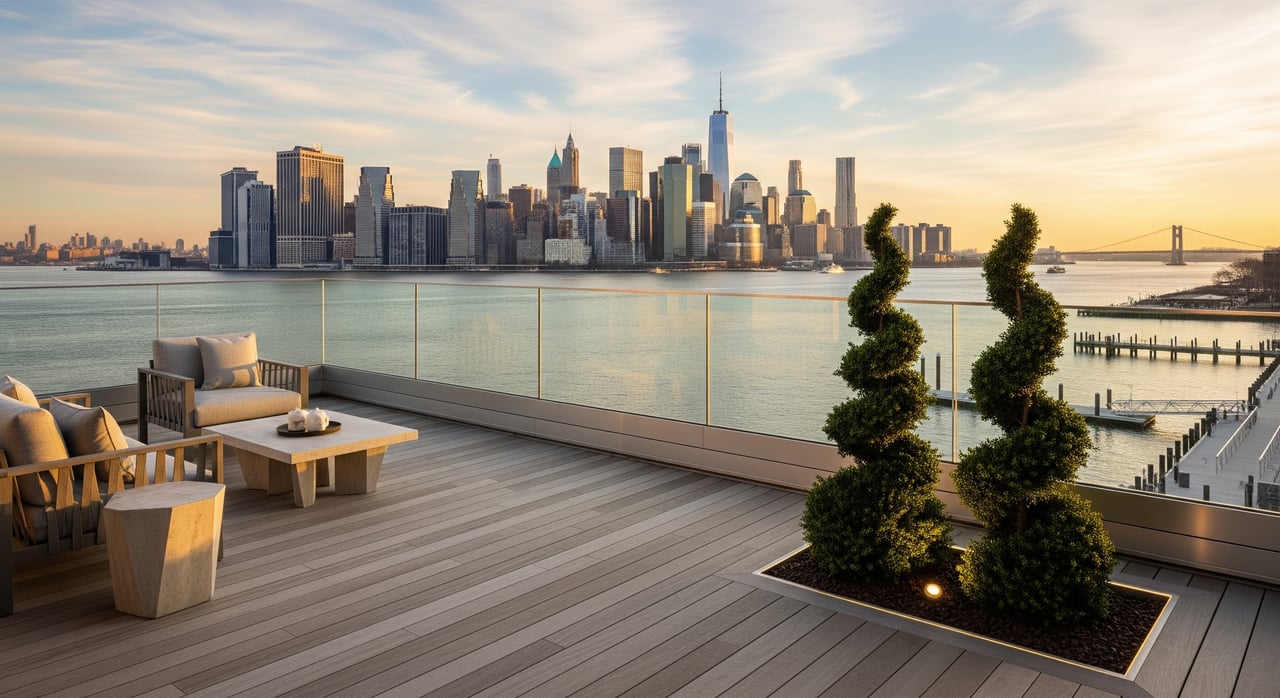
Imagine waking up to the Manhattan skyline outside your window and stepping onto a waterfront path for your morning walk. If you have been thinking about crossing the river for more space and amenities while staying minutes from the city, Hudson County’s Gold Coast is likely on your radar. In this guide, you will learn how the waterfront is laid out, what daily life feels like, how long typical commutes take, what buildings offer, and how to start touring with a smart plan. Let’s dive in.
What the Gold Coast means
Locals use “Gold Coast” to describe the Hudson River–facing waterfront in Hudson County. It includes Hoboken, Jersey City’s waterfront neighborhoods, Weehawken, West New York, Guttenberg, and parts of North Bergen. These areas grew from former industrial piers into dense residential communities with high‑rise towers, mid‑rise condos, and lively streets.
You are close to Manhattan, with direct skyline views from many buildings and parks. The appeal is simple: a waterfront lifestyle, fast transit, and often more interior space and amenities than a similar price point across the river.
Neighborhood snapshots
Hoboken
Hoboken is compact and very walkable, with a strong restaurant and nightlife scene. You will find classic brownstones, mid‑rise condos, and some newer towers near the river. Parks and a continuous promenade line the waterfront, and daily errands are easy on foot.
Jersey City waterfront and Downtown
Exchange Place, Paulus Hook, Newport, and nearby Harborside offer the largest cluster of high‑rises facing Lower Manhattan. The vibe near Exchange Place and Paulus Hook leans business district during the day, with many residents choosing the PATH or ferry for quick access to the Financial District. Buildings range from landmark luxury towers to newer glass condos with full amenities.
Weehawken, Port Imperial, and Lincoln Harbor
This stretch is quieter, with a long riverfront walkway and several ferry terminals. Many buyers come for slightly more space, excellent skyline views, and calm streets without giving up fast Manhattan access. You will see modern high‑rises and well‑planned residential communities with on‑site retail.
West New York and Guttenberg
These towns are dense and vertical along the river, offering high‑rise living with strong local businesses and diverse dining. Pricing per square foot can be more competitive for units with views compared to some southern waterfront neighborhoods. Expect a mix of newer towers and older complexes.
Nearby inland options
The Heights, Journal Square, and Bergen‑Lafayette sit close to the waterfront commute but offer different building styles. You will see townhouses, low‑rise condos, and new mid‑rises at varied price points. These areas can be a fit if you want value and still plan to use PATH or buses.
Your Manhattan commute, simplified
You have multiple ways to get into the city. Door‑to‑door time depends on your exact building and destination, so always factor in your walk and transfers.
- PATH: Many residents rely on PATH from Hoboken, Exchange Place, Newport, and Journal Square. Trips to World Trade Center from Jersey City waterfront stops are often under 10 to 15 minutes. Trips to Midtown’s 33rd Street from Journal Square or Hoboken often run 10 to 25 minutes depending on route and time of day.
- Ferry: Piers in Hoboken, Paulus Hook, Port Imperial, Lincoln Harbor, and West New York connect to Midtown and Lower Manhattan. Time on the water usually runs 20 to 30 minutes, plus your walk and boarding. Ferries are comfortable and scenic, but fares are higher than PATH and schedules vary seasonally.
- Hudson‑Bergen Light Rail: The Light Rail links waterfront neighborhoods north to south and connects to PATH in Hoboken and Newport. It is useful for intra‑county travel and for reaching PATH or ferry terminals.
- NJ Transit buses and trains: Hoboken Terminal is a major hub, and there are express buses to Port Authority. Buses into Midtown can take 20 to 45 minutes depending on Lincoln Tunnel traffic.
- Driving: You can drive via the Lincoln Tunnel or George Washington Bridge, but most daily commuters prefer transit due to congestion, tolls, and parking in Manhattan.
Pro tip: When you tour, time the exact walk from lobby to platform or pier. Two buildings in the same neighborhood can feel very different in daily rhythm.
Homes, buildings, and skyline views
Across the Gold Coast, you will find several common building types:
- Newer glass high‑rises with full amenities, from concierge and pools to rooftop lounges, fitness studios, and children’s playrooms.
- Large master‑planned communities with integrated retail and parking garages.
- Boutique condos and walk‑ups a few blocks inland.
- Townhomes and brownstones in select areas like Hoboken and parts of Jersey City.
View and exposure matter. Orientation and floor level can change both your panorama and your price. Some towers offer sweeping skyline outlooks and, farther south in Jersey City, views of the Statue of Liberty. Expect higher prices for premium views and upper floors.
Age and construction also play a role. Many post‑2000 buildings placed lobbies and critical systems above flood elevations and added resiliency features. Older waterfront buildings may have been retrofitted after major storms, so ask about recent improvements and flood mitigation.
Day‑to‑day lifestyle on the waterfront
Most Gold Coast neighborhoods are highly walkable, with grocery stores, cafés, fitness studios, and restaurants nearby. Weekends bring farmers’ markets and a lively dining scene, especially in Hoboken and downtown Jersey City.
Parks are a highlight. The Hudson River Waterfront Walkway runs along large stretches with uninterrupted promenades for running, biking, and sunset views. Popular green spaces include Hoboken’s pier parks, the Exchange Place waterfront in Jersey City, and the expansive Liberty State Park to the south.
Many towers include ground‑floor retail, and nearby streets offer both everyday conveniences and specialty shops. If you are comparing buildings, notice the street activity at different times of day. Proximity to terminals and waterfront paths can mean more foot traffic on sunny weekends.
For those evaluating schools, options and quality vary by municipality and neighborhood. Research specific district zoning and consider private or independent schools based on your needs.
Costs, taxes, and risk to factor in
The Gold Coast is among the most expensive housing in New Jersey, with premiums for riverfront addresses and direct skyline views. Prices vary by town, building age, unit size, and orientation, so compare recent sales within the same building and floor tier when possible.
Property taxes are a key factor. New Jersey has one of the highest overall property tax burdens in the country, and rates vary widely by municipality within Hudson County. Review the most recent tax bill for any unit you are considering and ask how assessments work.
Condo and HOA fees can be significant in amenity‑rich towers. Fees typically cover building maintenance, security, and shared spaces, and may include some utilities. Flood or private homeowner’s insurance is usually separate.
Parts of the waterfront are within FEMA flood zones, which can trigger lender requirements for flood insurance. Premiums vary based on the building’s elevation, flood mitigation, and the unit’s location. Many newer towers include resiliency design, and some older buildings have added protections. Ask for the building’s elevation certificate, flood mitigation details, and recent capital improvements.
Other recurring costs to plan for include parking fees, utilities, and your monthly commute budget for PATH, ferry, or buses. If you prefer an amenity‑heavy lifestyle, factor in dining and wellness spending that may come with a lively waterfront address.
How to start exploring buildings
Begin with clarity on your top priorities:
- Commute target, for example, World Trade Center, Midtown, or hybrid.
- View versus interior space and layout.
- Amenities versus lower HOA fees.
- Parking needs, pet policies, and any specific building rules.
- Family considerations and school research.
Build a smart search:
- Set alerts on major listing portals and filter for waterfront, view, or specific neighborhoods.
- Track HOA or maintenance fees and what is included, such as hot water, gas, or heat.
- Estimate your all‑in monthly cost: mortgage, taxes, HOA, flood insurance, parking, utilities, and commute.
Use an on‑site visit checklist:
- Visit at different times, like a weekday morning and a weekend afternoon.
- Walk the route to PATH, ferry, or Light Rail and time it.
- Tour amenities and ask about on‑site management, reserve funds, and any special assessments.
- Request recent association minutes, financials, reserve studies, and details on pending litigation.
- Confirm insurance requirements, flood zone status, and the building’s elevation certificate.
- Clarify parking, whether spaces are deeded or leased, and guest parking rules.
Prepare financing early:
- Get a pre‑approval and ask lenders about condo guidelines, reserves, and flood insurance impacts on underwriting.
- If you plan to buy a condo in a smaller association, confirm that the building meets lender requirements.
Work with local experts:
- A local agent who knows the Gold Coast can explain micro‑neighborhood tradeoffs, building reputations, and recent sales.
- Consult an insurance agent about flood coverage scenarios and a real estate attorney for a thorough review of condo documents.
Shortlist wisely:
- Narrow to three to five buildings and compare recent sales of similar floor plans and view tiers.
- Note days on market and price per square foot to understand where each building sits in the current market.
Ready to tour the Gold Coast?
If waterfront living is calling, you deserve a guide who knows each pier, promenade, and tower by heart. As a bilingual, dual‑licensed advisor focused on Hudson County’s riverfront, I can help you fine‑tune commute tradeoffs, compare buildings, and negotiate with confidence. For a thoughtful, high‑touch plan tailored to your goals, connect with Monica Capellan.
FAQs
What areas make up Hudson County’s Gold Coast?
- The Gold Coast generally includes the waterfront in Hoboken, Jersey City’s Downtown and Exchange Place areas, Weehawken, West New York, Guttenberg, and parts of North Bergen.
How long does the commute from the Gold Coast to Manhattan take?
- PATH trips can be 10 to 25 minutes depending on your stop and destination, ferries run about 20 to 30 minutes on the water, and buses vary with tunnel traffic.
Are waterfront condos more expensive than inland options in Hudson County?
- Yes, riverfront locations and direct skyline views carry premiums, though older buildings or inland neighborhoods may offer better value at similar sizes.
What amenities are common in Gold Coast high‑rises?
- Concierge or doorman service, fitness centers, pools, rooftop lounges, package rooms, children’s play areas, pet amenities, business centers, and on‑site parking are common.
Do I need flood insurance for a waterfront condo in Hudson County?
- If a building or unit is in a mapped FEMA flood zone, lenders commonly require flood insurance; ask for the elevation certificate and building mitigation details.
What recurring costs should I plan for beyond the mortgage?
- Budget for property taxes, HOA or maintenance fees, flood or homeowner’s insurance, parking, utilities, and monthly PATH or ferry expenses.