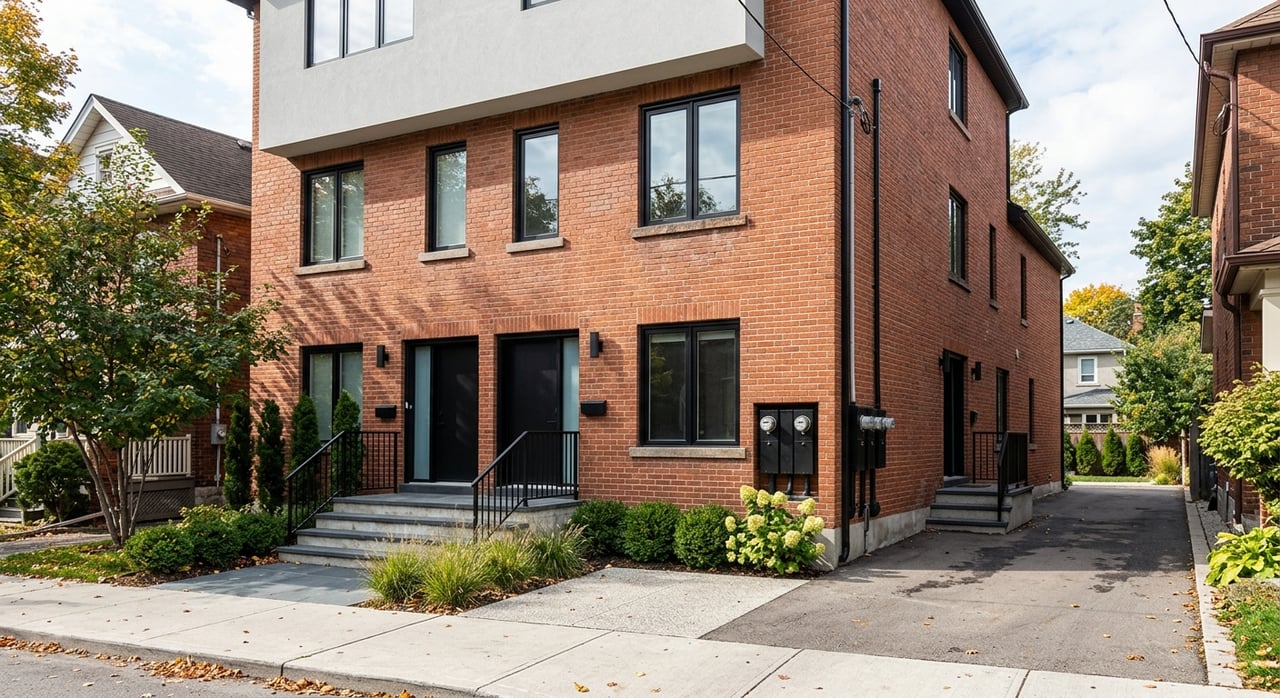
If you are looking for a way to break into Bergen County real estate investing, small multifamily homes deserve a serious look. In a market where purchase prices are high and monthly costs can change quickly, the right 2 to 4 unit or small apartment property can create income, flexibility, and long-term upside. This guide will help you understand what makes Bergen County, and especially Hackensack 07601, worth watching, what numbers matter most, and where investors need to be careful. Let’s dive in.
Why Bergen County Fits Small Multifamily Investing
Bergen County offers a mix that many investors want but do not always find in one place. It is dense, high-income, and tied closely to the broader New York metro economy. According to U.S. Census data in the research report, countywide median household income is $124,884, per-capita income is $63,735, and unemployment is 3.7%.
The county also has a meaningful renter base. Owner-occupied housing is 65.3%, which means about one-third of homes are renter-occupied. That matters because small multifamily investing works best where demand for rental housing is broad and consistent.
In practical terms, Bergen County is not just a high-rent market. It is a commuter-oriented suburban county where many renters want access to space, services, and regional transportation without leaving the New York metro area.
Why Hackensack 07601 Stands Out
If your search is focused on 07601, Hackensack deserves extra attention. It is the largest municipality in Bergen County and has a more renter-heavy housing mix than the county overall. The research report shows owner-occupied housing at 38.4%, median gross rent at $1,794, median household income at $82,212, and mean travel time to work at 28.8 minutes.
Those numbers support the case for smaller rental buildings in the city. A market with a stronger renter presence can offer more consistent demand for apartments, especially when units are well located and reasonably priced for the area.
Transit is another big reason Hackensack stays on investors’ radar. NJ Transit’s Bergen County and Main-Bergen County rail corridor serves Hackensack, helping connect residents to the wider region. For many buyers, that makes small multifamily homes appealing both as income properties and as house-hack opportunities.
What Types of Properties Make Sense
Small multifamily investing in Bergen County usually falls into three practical buckets. Each one can work, but each needs a different underwriting approach.
House-hackable 2 to 4 units
These properties appeal to buyers who want to live in one unit and rent the others. In a high-cost market, that rental offset can make ownership more realistic while still letting you build equity.
This setup can be especially useful if you want to enter the market with a primary residence loan instead of buying purely as an investor. It also gives you a closer view of how the property operates day to day.
Stabilized small apartment buildings
A stabilized 5 to 6 unit building or similar small asset can work well if rents are already in place and expenses are reasonably controlled. In Bergen County, these deals tend to trade more like income assets than owner-occupied homes.
For this type of property, success often comes down to whether the existing income can comfortably support debt service, taxes, maintenance, and normal vacancy. In today’s market, there is not much room for loose assumptions.
Mixed-use with modest commercial space
Some buyers also consider mixed-use properties, especially where the commercial component is small and legally compliant. These can offer higher yields on paper, but they also come with more financing and appraisal complexity.
The research report notes that Bergen County mixed-use medians are often higher than pure residential multifamily. That yield premium may reflect added risk, added complexity, or both.
What Cap Rates Are Telling You
Cap rates are one useful way to compare Bergen County multifamily opportunities, but they only tell part of the story. According to the research report, Berkadia’s 2024 forecast put the Northern New Jersey average cap rate at 5.4%, while a Matthews Q1 2026 report showed a 6.86% cap rate, 3.9% vacancy, and 1.6% rent growth.
Public listing examples in the report place many small Bergen County apartment deals in the low-6% to low-7% range. Examples include 490 Broad Avenue in Leonia at 6.03%, 467 Hudson Street in Hackensack at 6.05%, 54 Stuyvesant Avenue in Lyndhurst at 6.22%, and 79 Wessington Avenue in Garfield at 7.20%.
That range matters because it helps frame what the market is pricing in. A lower cap rate often points to a more stabilized or lower-risk asset, while a higher cap rate can suggest value-add upside, less stability, or a need for more conservative underwriting.
Why cap rate alone is not enough
In Bergen County, a good-looking cap rate can be misleading if taxes, regulation, or deferred costs are not fully reflected. The research report makes an important point here: when mortgage rates sit near asking cap rates, small changes in property taxes, vacancy, and rent-growth assumptions can decide whether a deal actually cash flows.
That means you should look past the headline number. A deal at 6.2% is not automatically better than one at 6.0% if the higher-yield property has heavier compliance costs, less stable rents, or a tougher expense profile.
Financing Options for Small Multifamily Buyers
If you plan to live in one of the units, financing may be more flexible than many buyers expect. The research report notes that Fannie Mae expanded standard eligibility for owner-occupied 2 to 4 unit purchases to 95% loan-to-value for eligible borrowers on and after November 18, 2023. That can mean as little as 5% down in qualifying cases, though it does not apply to high-balance loans or manual underwriting.
Fannie Mae also allows rental income from the non-owner-occupied units to be used for qualification, and Freddie Mac supports similar owner-occupied 2 to 4 unit structures. For buyers who want to house hack, that can materially improve affordability.
FHA financing is still relevant too. HUD states that down payments can be as low as 3.5% on 1 to 4 unit properties, though three- and four-unit purchases usually receive closer review of projected rents and reserves.
New Jersey affordability programs
For owner-occupants buying a primary residence in New Jersey, NJHMFA programs may also help. According to the research report, first-time buyers are generally those who have not owned a home in the prior three years, and down-payment assistance can reach up to $22,000, with certain first-generation buyers eligible for additional support.
These programs are not designed for pure investors, but they can be valuable if your goal is to buy a small multifamily home as your primary residence. In the right situation, this can lower your cash needed at closing and improve your overall entry point.
The Biggest Underwriting Risks in 07601
This is where local knowledge matters. In Hackensack, investment analysis should go beyond price, rent roll, and unit count.
Rent stabilization rules
Hackensack has a formal rent-stabilization structure, including a Rent Board, Chapter 134 of its code, and published landlord and tenant forms. The city also states that dwellings first offered for rent after August 2, 1982 are exempt.
That exemption date matters. A property’s age and certificate-of-occupancy history can materially affect rent growth assumptions, renovation strategy, and your long-term business plan.
Lead-safety compliance
Certain Hackensack rental properties are required to have a visual inspection under New Jersey’s Lead Safe Certification Law. This may sound like a small item, but it can affect both timing and cost.
If a property needs inspection work, remediation, or added coordination before occupancy or lease-up, your real operating budget can look very different from the seller’s marketing sheet. That is one reason local due diligence matters so much in older housing stock.
Property taxes
Property taxes are a major line item in New Jersey, and Bergen County is no exception. The research report notes that New Jersey property taxes are assessed on an ad valorem basis and that Hackensack’s 2024 effective tax rate was 2.678.
Two nearby properties with similar rents can produce very different monthly results if their tax bills are meaningfully different. For small multifamily investors, that can have a direct impact on cash flow, debt coverage, and resale appeal.
A Practical Way to Evaluate Deals
If you are comparing Bergen County small multifamily homes, it helps to keep your analysis simple and disciplined. Start with the fundamentals before you get excited about upside.
Focus on these first
- Purchase price
- In-place rent and realistic market rent
- Property taxes
- Insurance and maintenance
- Vacancy allowance
- Compliance costs, including local requirements
- Financing terms and reserves
Once those basics are clear, you can ask the more strategic question: What kind of opportunity is this really?
- Is it a house hack with strong rental offset?
- Is it a stabilized income property with efficient expenses?
- Is it a mixed-use deal with extra complexity but better yield potential?
That framing can help you avoid comparing very different assets as if they were interchangeable.
What Smart Buyers Should Take Away
Bergen County small multifamily investing can work well, but it rewards careful buyers more than aggressive assumptions. The area offers real demand drivers, including high incomes, commuter access, and a solid renter base, especially in Hackensack 07601.
At the same time, this is a market where taxes, local rules, and financing structure can shape the outcome of a deal just as much as rent. The strongest opportunities tend to be the ones where the numbers still make sense after you account for the real cost of owning and operating the property.
If you want to explore Bergen County multifamily opportunities with a clear, local, and practical strategy, Monica Capellan can help you evaluate the numbers, the neighborhood context, and the deal structure with the hands-on attention these properties require.
FAQs
What makes Bergen County small multifamily homes attractive to investors?
- Bergen County combines high household incomes, a meaningful renter base, and strong regional commuter connections, which can support steady demand for well-located rental housing.
Why is Hackensack 07601 important for small multifamily buyers?
- Hackensack has a more renter-heavy housing profile than Bergen County overall, plus regional transit access and established rental demand that can make 2 to 4 unit and small apartment properties especially relevant.
What cap rates are common for Bergen County small multifamily properties?
- Based on the research report, many publicly marketed small apartment properties in Bergen County are being offered in the low-6% to low-7% cap-rate range, with mixed-use assets often showing higher yields.
Can you buy a 2 to 4 unit property in Bergen County with low money down?
- If you will occupy one unit as your primary residence and meet lender requirements, options in the research report include eligible conventional financing with as little as 5% down and FHA financing with as little as 3.5% down.
What local risks should you check before buying a Hackensack multifamily property?
- Key items include Hackensack rent-stabilization rules, possible lead-safety inspection requirements, and property taxes, all of which can materially affect cash flow and long-term planning.
Are mixed-use properties in Bergen County worth considering?
- They can be, especially when the commercial component is modest and legally compliant, but they often require more conservative underwriting because financing and appraisal standards can be more complex.